
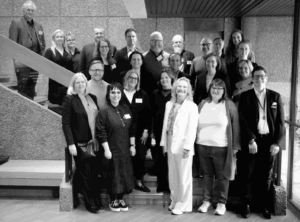
Hanaholmen Heritage – The Nordic-Baltic Cooperation for Cultural Heritage and Preparedness.
Last May, Thóra Björk Ólafsdóttir, Executive Director of the National Heritage Board, and Rúnar Leifsson, Director of the National Museum of Iceland, attended a three-day working meeting in Hanaholmen, Finland. They were appointed by the Ministry of Culture, Innovation and Higher Education as representatives of Iceland in the cooperation project. Hanaholmen Heritage – The Nordic-Baltic Cooperation for Cultural Heritage and Preparedness. The initiative for the project comes from the ministers of culture of the Nordic and Baltic countries, with the support of the Nordic Council of Ministers, but the project is hosted by the Swedish-Finnish cultural center Hanaholmen. All Nordic and Baltic countries, along with the Faroe Islands, Greenland, and the Åland Islands, were invited to nominate two representatives to participate.
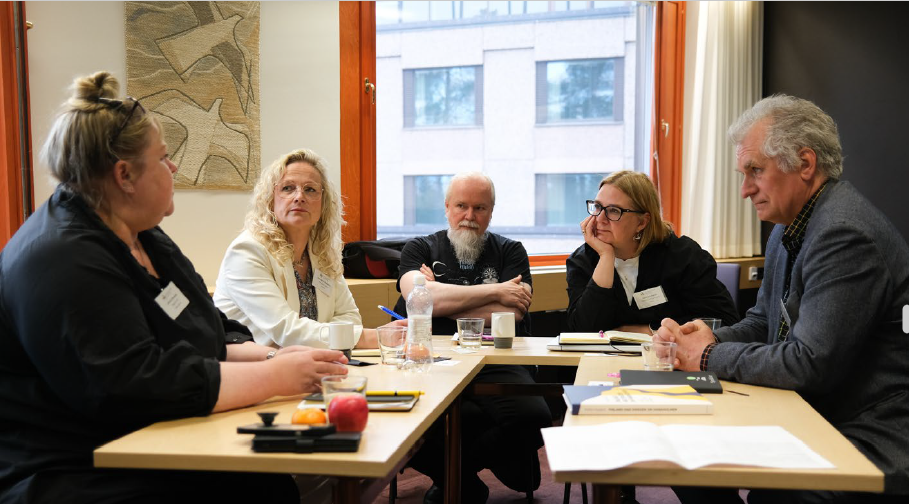
This is a preparatory and collaborative project by cultural experts to strengthen response plans and the protection of cultural heritage. The occasion is growing tension in international affairs and conflict in Europe with Russia's invasion of Ukraine, where systematic attacks on Ukrainian cultural heritage show that preservation issues are a crucial part of a nation's security and defense. The course brought together experts from various fields, including military experts, lawyers, historians, and museum professionals, to discuss responses to military threats, hybrid threats, and climate change.
The work began in early 2026 with remote meetings where participants received an introduction and a work plan. Following that work, there was a three-day in-person workshop at Hanaholmen on 11-13. May, where participants attended expert lectures, shared their experiences with one another, and worked in interdisciplinary working groups to analyze vulnerabilities and formulate plans on how the states can work together on prevention, increase resilience, and prepare response plans.
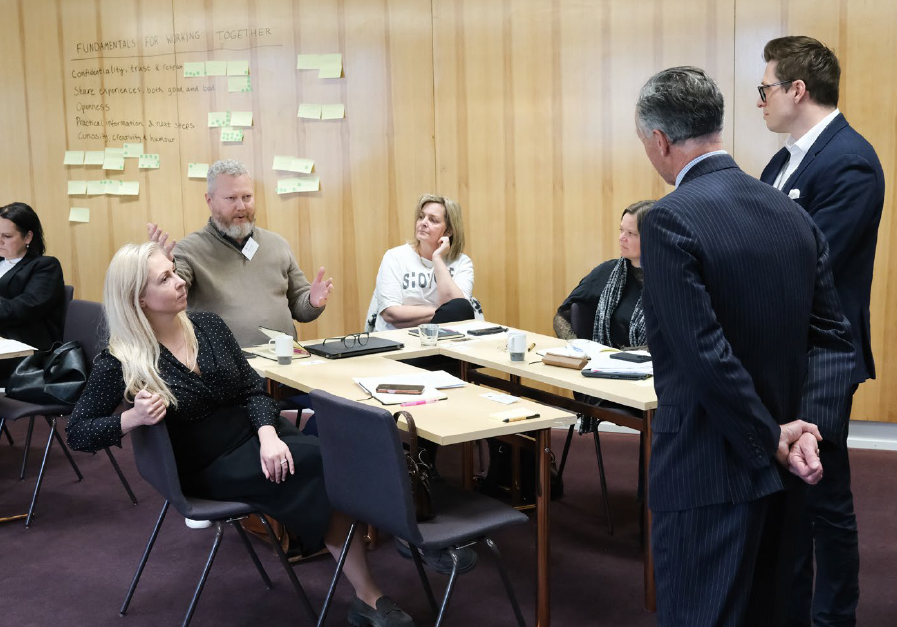
A large part of the work consisted of working group discussions, where there were three main topics of discussion. First, the discussion focused on the balance between public open access and security measures. The conclusion was that tangible cultural heritage is more protected in society; on the other hand, digital data faces an increased risk from factors such as cyberattacks. Secondly, the protection of the cultural heritage of minority groups and indigenous peoples was discussed, with an emphasis on allowing these groups to define their own history. Thirdly, the groups worked on prioritizing responses in an emergency, in a workshop led by the World Monuments Fund. It was noted that response plans must be accompanied by practical exercises that are integrated into daily processes, because although plans on paper are necessary, a real emergency usually calls for resourceful solutions and flexibility.
The speakers at the course were in agreement that democratic states should increase the importance of cultural heritage in security affairs, that cultural protection should be part of a state's national security, and that the importance of cultural heritage should be strengthened within NATO. But it is well known that authoritarian states use culture and history as political tools to, for example, justify actions on false pretenses; the 1954 Hague Convention, in turn, highlights the importance of a legal framework for holding parties accountable for war crimes. Examples from Gaza and Ukraine were also discussed, demonstrating the importance of digital data and cultural-historical datasets for preserving cultural and social memory, even when the monuments themselves are destroyed.
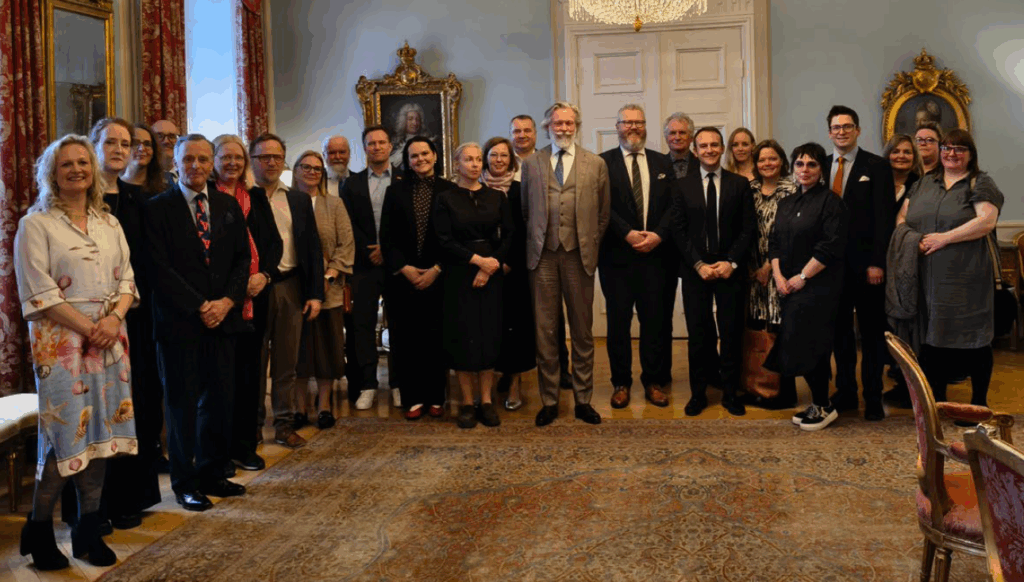
The workshop was followed by a conference, The Hanaholmen Heritage Conference, which took place on May 28, where international experts and professionals from the Nordic countries and the Baltic states discussed the issue in these times of uncertainty, climate change, and tension on the international stage.