
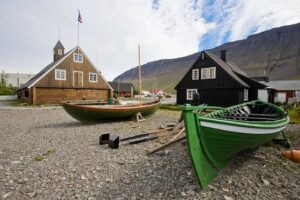
Social Responsibility of Collections: Access and Inclusion
Field School for Museum People 2026 took place in Ísafjörður from October 7–9, and was held at Edinborgarhúsið. The theme of the traveling school this time was Social responsibility of museums with an emphasis on accessibility and inclusion. A packed program was offered where museum professionals came together to learn, discuss pressing issues in museum work, and strengthen connections within the profession.
The program of the mobile school was characterized by numerous seminars where various challenges and innovations in museum work were discussed. Topics ranged from the development of software solutions that use machine learning to catalog collections in Sarpi, to accessibility for people with disabilities in heritage buildings, and the communication of sensitive and previously taboo issues in museum work.
In the opening address, Who are museums for?, Thorhildur Tinna Sigurardottir, director of the Fjarðabyggð Cultural Center, raised the question of how museums can be more open and how access for diverse groups can be improved, e.g., LGBTQ+ people and neurodivergent individuals, so that they can better reflect the community they serve.
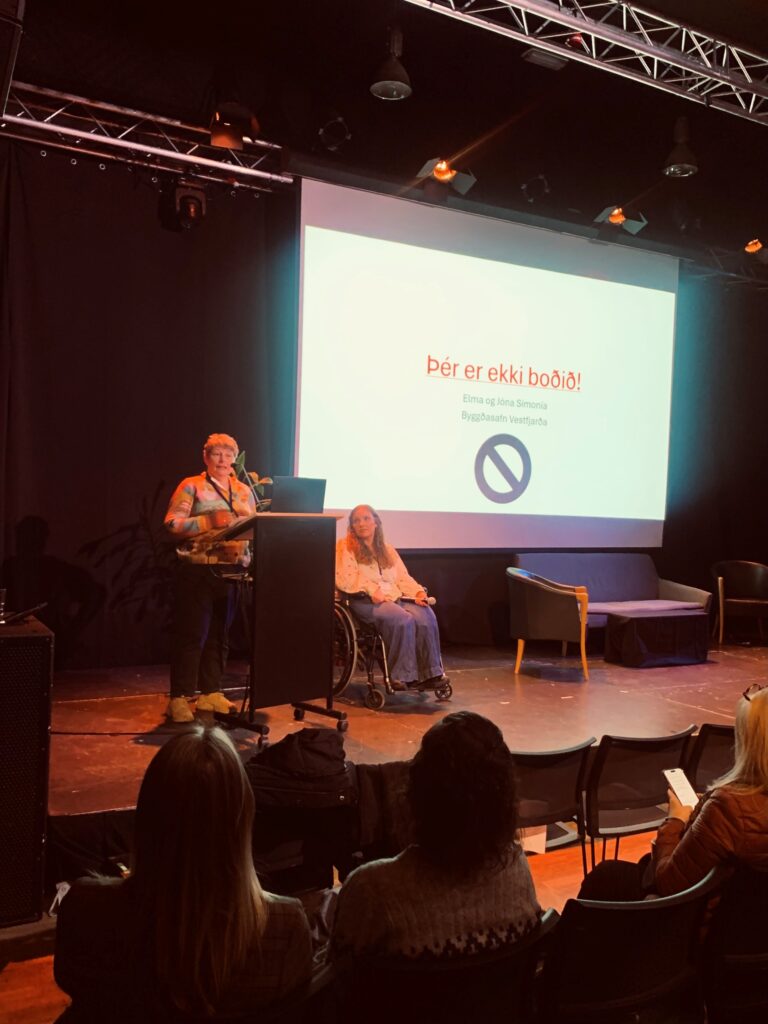
Then Jón Símoníu Bjarnadóttir, director of the mobile school and director of the Westfjords Museum, along with Elma Guðmundsdóttir, a museum employee, delivered the presentation, You are not invited, which addressed accessibility – or rather, the barriers – for individuals with disabilities. The discussion highlighted the value of getting perspectives and advice on accessibility issues directly from people with disabilities, as their experience is what matters most.
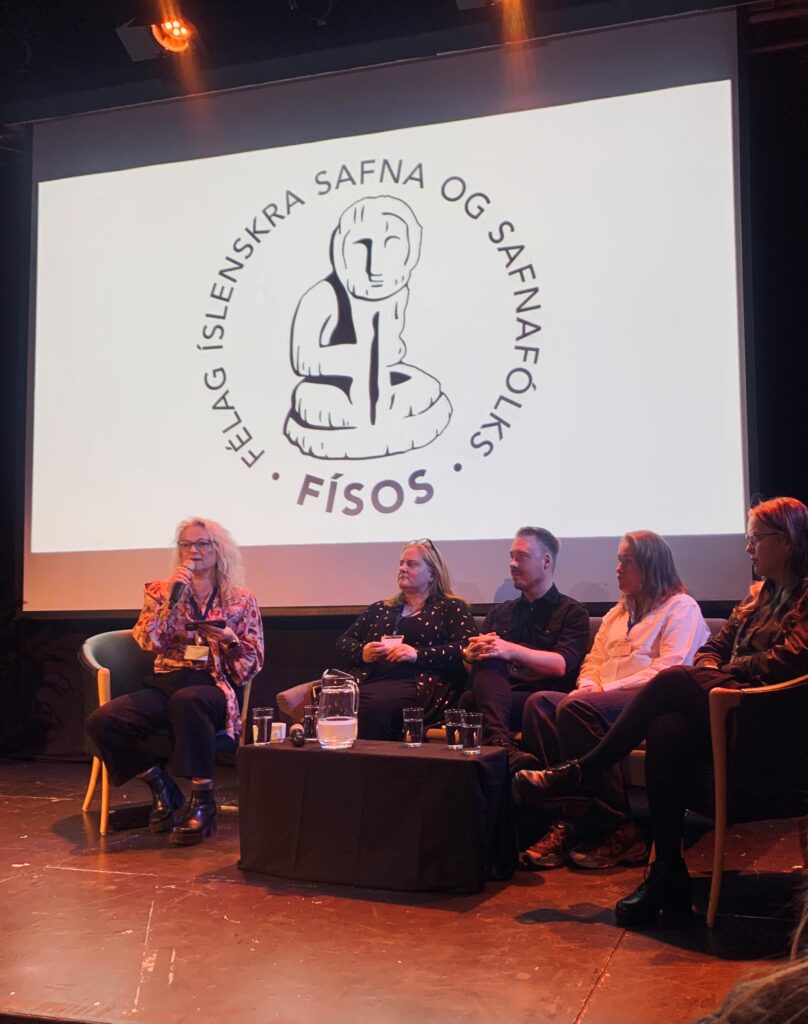
Finally, a panel discussion was held where museum professionals shared personal stories from their work regarding inclusion and accessibility, moderated by Þóra Björk Ólafsdóttir, Executive Director of the Museum Council.
General Meeting of FÍSOS
The FÍSOS annual general meeting was held over a light lunch. Since Kristín Halla Baldvinsdóttir did not run for re-election, an election for the board of directors was held. Steinunn María Sveinsdóttir, director of the Air Museum of Iceland, was elected the new chair of FÍSOS. In addition, a new vice-chair and a new board member were elected. A proposal was made to increase the annual membership fee to 7,000 kr. and for institutions to pay 20,000 kr., which was approved. Finally, those not already registered were encouraged to join the association.
Tour of Suðureyri and Ísafjörður
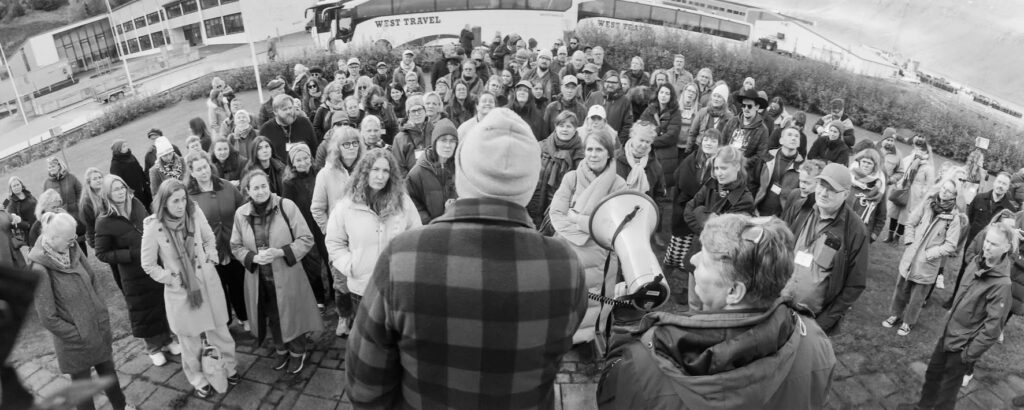
Museum staff traveled around Suðureyri and Ísafjörður on an informative and fun tour. They visited the Suðureyri Church and walked around the town with a local who told them about the local customs and history. The group then visited the Old Hospital in Ísafjörður, which today houses the Ísafjörður Museum. The day ended with a reception in Neðstakaupstaður, featuring refreshments and musical entertainment.
Symposia and a wide range of topics
The second day began with a speech by Sigurgeir I. Thorkelsson on behalf of Samtökin ’78. He discussed the state of the queer community and the challenges we face, and called for a discussion on how these challenges manifest in library work. This was followed by various workshops.
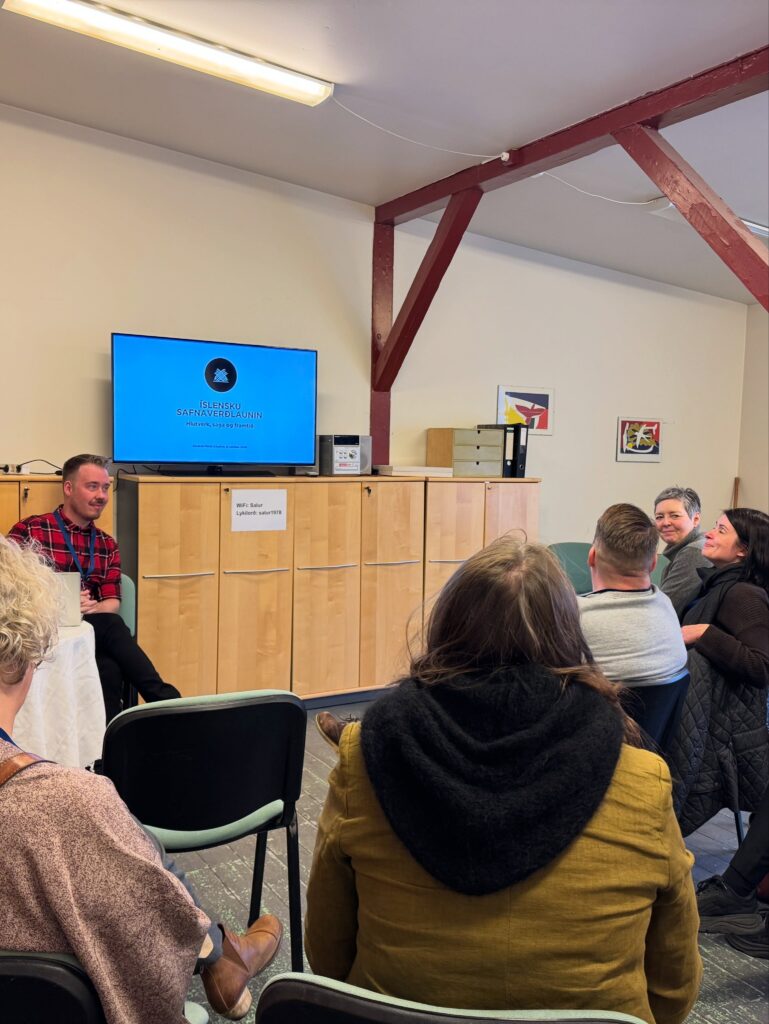
First part of the seminar: In addition to the presentation of the software solution Collection of Ara Vigdís Hlíf discussed in her speech, Class-based museum education, on the results of her master's thesis research on how students' access to fieldwork at museums is unequal. Ingibjörg Eðvaldsdóttir and Guðmundur Lúðvík Gunnarsson from the National Museum of Iceland led the seminar. To have a friend in truth The focus was on common challenges in operations and human resources. Sigurður Trausti discussed open storage spaces, and Ragnhildur Helga Jónsdóttir and Anna Heiða Baldursdóttir spoke about volunteers in museums under the heading Inclusion or „enslavement“?. Then, the staff of the Reykjavík City History Museum discussed queerness in the collection of the Reykjavík Photograph Museum.
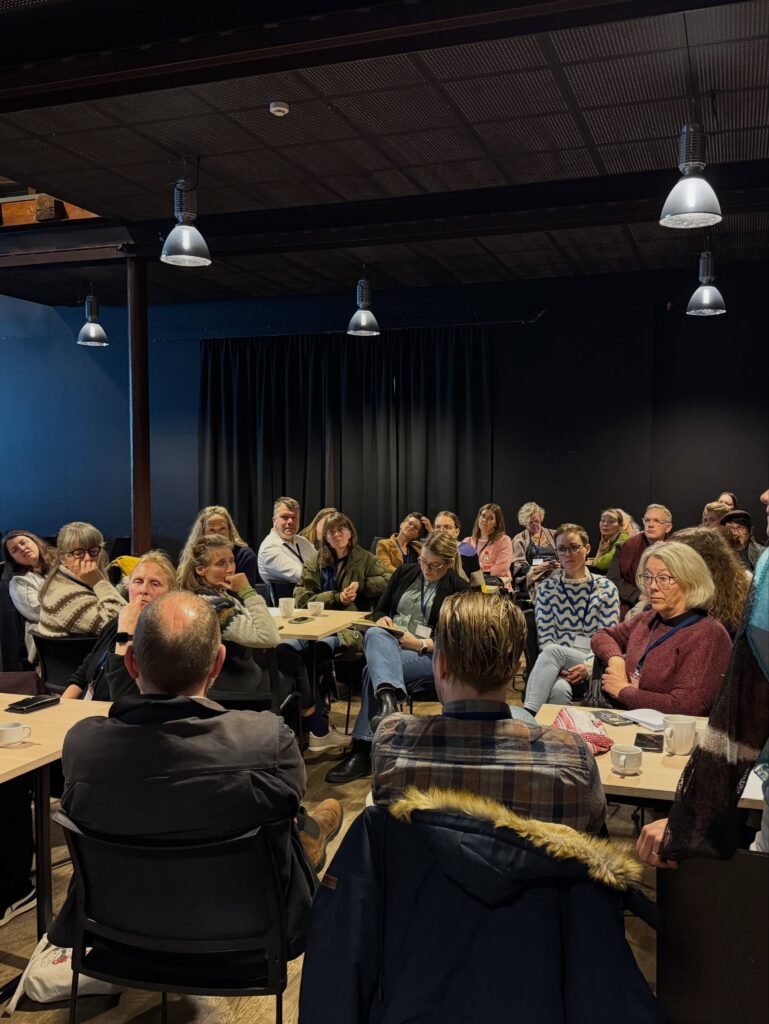
Second part of the seminar: Helga Vollertsen and Jóhanna Bergmann led a seminar on Reception of Special Groups in Church Ministry. Staff of the City History Museum also held the seminar. What Must Not Be Spoken Of – Real-Life Examples, where sensitive issues were discussed regarding an exhibition in preparation at the Árbæjarsafn Museum. Hólmar Hólm, chairman of the Icelandic branch of ICOM, discussed the history and future of the Icelandic Museum Awards, Árni Pétur Arnason and Þórhildur Tinna discussed the merger of smaller museums in the countryside, and the National Film Archive of Iceland presented the dissemination of film heritage in the lecture To open a window and more.
Third part of the seminar: Museums in tourism, challenges and opportunities were discussed, but that discussion was handled by Anita Elefsen, Elfa Hlín, and Haraldur Þór. The City History Museum presented a project on the experience of an autistic individual at the museum's exhibition venues and the accessibility of protected buildings for people with disabilities. The impact of artificial intelligence and technological development on photography collections was discussed by Herdis Geirsson and Kristin Halla. Emily Lethbridge and Marta Guðrún Jóhannesdóttir from the Árni Magnússon Institute led the seminar. Turning Points & Edda Opens Its Arms – Collections, Community, Compassion. It discussed how to use the museum's collection to connect with refugees and other community groups and to promote mutual understanding. Finally, the participation of the National Gallery of Iceland in the European projects EMBARK and CUSP and the application process for grants—the opportunities there for museum professionals and museums—was discussed.
The museum magazine Kvistur He came to the house and museum-goers were able to get their hands on a new copy. Sigurjón Baldur Hafsteinsson presented his newly published book. Reflections on collections and community at the Dock, the ever-popular also took place there Pub quiz Organized by Sigurlaugur Ingólfsson. The magnificent annual banquet for museum staff was held at Edinborgarhúsið, hosted by Einar Viðar and featuring music from the band Drumbununum.
Last day of school
On the final day, conference attendees heard a presentation from Margrét M. Norðdahl of Listvinnslan, an art center and professional platform in downtown Reykjavík where artists with disabilities create and develop their art. The program of the traveling school concluded with the panel discussion. The collection outside the museum under the direction of Steinunn María Sveinsdóttir. Before the mobile school concluded, it was announced that the next mobile school will be held in Húsavík in a year's time, and Árni Pétur Hilmarsson, director of the Culture Center of Þingeyjar, took over as the new mobile school director. Jóna Símonía Bjarnadóttir, Dagrún Ósk Jónsdóttir (project manager for FÍSOS), and Rannveig Jónsdóttir (Icelandic Museum of Art) are thanked for the magnificent organization of this successful mobile school.